



















































December 22 in History: First Electric Christmas Tree, World’s First Cloned Cat, and Dostoevsky’s Narrow Escape
December 22 marks historic events including the first electric Christmas tree, the birth of the world’s first cloned cat, and Dostoevsky’s dramatic escape from execution.


December 22 has witnessed several remarkable moments that left a lasting impact on culture, science, and literature. From the first Christmas tree illuminated with electric lights to a breakthrough in animal cloning and a dramatic reprieve that shaped one of the world’s greatest writers, this date holds a unique place in history.
Here’s a look at some of the key global events that unfolded on this day.
First Christmas Tree Lit with Electric Lights (1882)
The tradition of decorating Christmas trees with electric lights began on December 22, 1882, marking a major shift in holiday celebrations.
The innovation was introduced by Edward H. Johnson, a close associate of inventor Thomas Edison, at his home in New York City. At a time when Christmas trees were commonly decorated with candles, which often caused dangerous fires, Johnson’s idea offered a safer alternative.
His tree, about six feet tall, was adorned with 80 hand-wired red, white, and blue electric bulbs. Powered by a generator, the lights rotated around the tree, creating a stunning visual effect. A local newspaper reported the display, highlighting it as a remarkable demonstration of Edison’s electric lighting technology.
However, electricity was still rare and expensive in the late 19th century. As a result, electric Christmas lights remained a luxury for decades. It was only in the early 20th century—when electricity became widespread and mass production reduced costs—that electric lights became common in homes across the world.
World’s First Cloned Cat Born (2001)
On this day in 2001, the world’s first cloned cat, named CC (CopyCat), was born at Texas A&M University in the United States, marking a major milestone in genetic science.
Scientists used a technique known as somatic cell nuclear transfer, transferring genetic material from an adult calico cat into an egg cell with its nucleus removed. The embryo was then implanted into a surrogate cat, resulting in the healthy birth of CC.
Interestingly, although CC shared the same DNA as her donor, her fur pattern was different, demonstrating that genetic identity does not guarantee identical physical appearance. This discovery helped scientists better understand how genes and developmental processes interact.
While the achievement was praised for advancing scientific knowledge, it also sparked ethical debates regarding animal cloning and welfare. CC, however, lived a healthy life and became an important symbol of progress in cloning research.
Fyodor Dostoevsky Spared from Execution (1849)
One of the most dramatic moments in literary history occurred on December 22, 1849, when Russian novelist Fyodor Dostoevsky was spared from execution at the last possible moment.
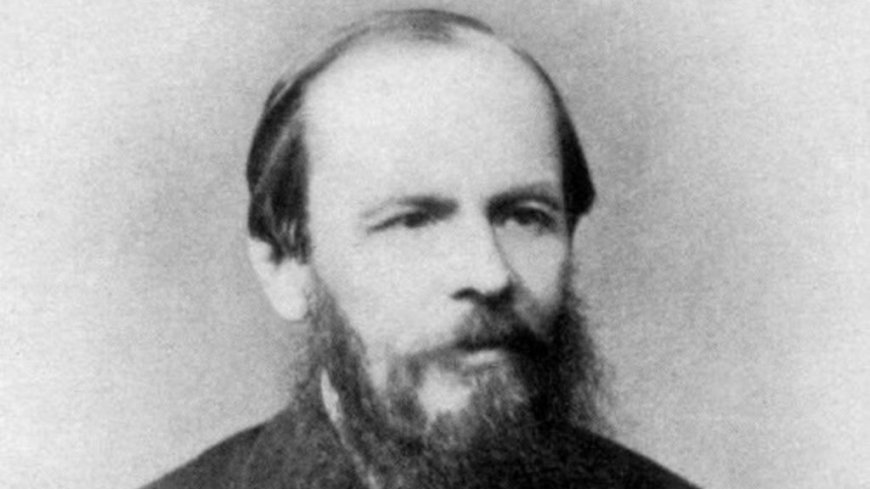
Dostoevsky had been arrested for his association with the Petrashevsky Circle, a group discussing banned literature and reformist political ideas under Tsar Nicholas I. He and others were sentenced to death and taken to Semyonovsky Squarein Saint Petersburg, where execution preparations were fully carried out.
Just seconds before the firing squad was to act, a messenger arrived with a decree commuting the sentences. Dostoevsky’s punishment was changed to four years of hard labour in Siberia, followed by compulsory military service.
This near-death experience profoundly influenced his later works, shaping themes of suffering, redemption, faith, and moral conflict seen in classics such as Crime and Punishment, The Idiot, and The Brothers Karamazov.
This Day, That Year
-
1941: Franklin D. Roosevelt and Winston Churchill met in Washington, DC, to discuss World War II
-
1666: Sikh Guru Gobind Singh was born
-
1216: Pope Honorius III formally approved the Dominican Order
What's Your Reaction?
 Like
0
Like
0
 Dislike
0
Dislike
0
 Love
0
Love
0
 Funny
0
Funny
0
 Angry
0
Angry
0
 Sad
0
Sad
0
 Wow
0
Wow
0