











































Puli Thevar: India’s First Warrior to Rise Against British Rule
Discover the story of Puli Thevar, the first Indian ruler to rebel against the British East India Company, decades before the 1857 Revolt.

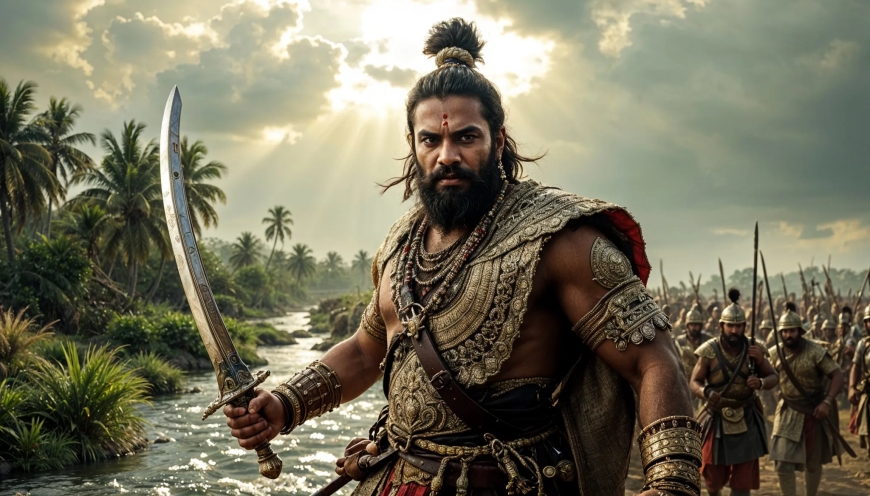
Long before Mangal Pandey ignited the uprising of 1857, a fearless Tamil warrior had already taken up arms against British colonial oppression. His name was Puli Thevar—“Puli” meaning tiger in Tamil—and he lived up to that name through his unmatched bravery, military brilliance, and political foresight.
Born in 1715, Puli Thevar belonged to the Thevar community of present-day Tamil Nadu. He ruled as a Palayakkarar (Poligar) over the region of Nelkatumseval (Avudayapuram), now part of Sankarankoil taluk. Known for his just governance and unwavering commitment to Dharma, Puli Thevar also earned distinction as the first native Hindu ruler in the Indian subcontinent to openly rebel against the British East India Company.
Changing Power Dynamics in South India
Between the 16th and 18th centuries, South India was governed through a feudal system under the Nayaka rulers of Madurai, who themselves operated under the Vijayanagar Empire. The Palayakkarars were entrusted with regional administration, tax collection, and military duties, retaining 25% of land revenue while remitting the rest to the central treasury.
This system collapsed after the Battle of Talikota (1565), which led to the downfall of the Vijayanagar Empire. Subsequently, Mughal authority expanded southward, appointing the Nawab of Arcot to collect taxes. However, the Palayakkarars resisted this external control and refused to surrender their autonomy.
As Mughal and Maratha power weakened, the British exploited the situation. By extending loans to the Nawab of Arcot, they gained the authority to collect taxes directly from Palayakkarar territories. The imposition of additional land taxes (kishti) and violent enforcement brought the British into direct conflict with local chieftains.
Puli Thevar vs the East India Company
Puli Thevar emerged as a unifying leader among the Palayakkarars, gaining support from both eastern and western regions, including coastal Sivagangai. His first major confrontation with the British came against Colonel Alexander Heron, who led Company forces alongside the Nawab’s army.
While the British initially advanced using superior firearms, they were decisively halted at Nelkatumseval Fort. Puli Thevar employed guerrilla warfare, using small mobile units familiar with the terrain to disrupt British supply lines. Heron’s artillery failed to breach the fort, and his forces were eventually forced into retreat. The humiliation led to Heron’s court-martial and recall to Britain.
Buoyed by this victory, Puli Thevar forged alliances, including with the Travancore kingdom, and launched multiple campaigns against Nawab-controlled territories. For nearly a decade (1750–1760), he remained undefeated, crushing several Pathan generals of the Nawab’s army.
Betrayal and Fall
The tide turned with the arrival of Yusuf Khan, a formidable commander trained under the French military. Born Maruthanayagam Pillai, a Hindu convert to Islam, Yusuf Khan combined modern warfare tactics with strategic diplomacy. He successfully severed Puli Thevar’s alliance with Travancore and neutralized eastern Palayakkarar support—possibly through hostage pressure and political coercion.
Despite relentless resistance, Puli Thevar faced dwindling resources and internal betrayals. Eventually, British–Nawab forces captured Nelkatumseval. Accounts of his death vary: some say he was executed at Kalugumalai, while others narrate a legendary escape during worship at Sankaran Kovil, where only broken chains were found.
Legacy
Regardless of how his life ended, Puli Thevar’s legacy lives on as a pioneer of armed resistance against British imperialism. His courage, strategic brilliance, and devotion to justice make him one of India’s greatest yet most under-recognised freedom fighters.
What's Your Reaction?
 Like
0
Like
0
 Dislike
0
Dislike
0
 Love
0
Love
0
 Funny
0
Funny
0
 Angry
0
Angry
0
 Sad
0
Sad
0
 Wow
0
Wow
0