



























India-Russia oil and defence ties, Putin India Visit
Russian President Vladimir Putin will visit India this week for a summit with Prime Minister Narendra Modi aimed at boosting energy, defence and economic ties, as Moscow seeks to secure oil sales amid tightening Western sanctions.

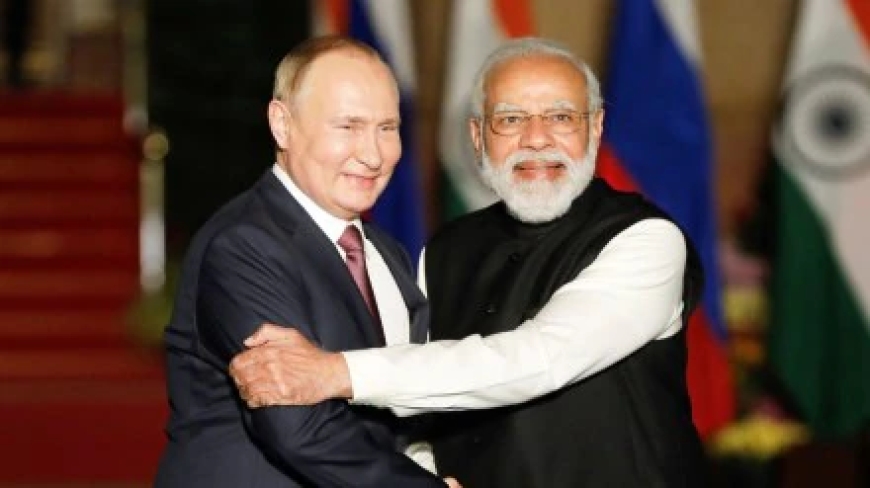
Russian President Vladimir Putin will visit India this week for a summit with Prime Minister Narendra Modi aimed at boosting energy, defence and economic ties, as Moscow seeks to secure oil sales amid tightening Western sanctions.
Moscow's energy exports are a key revenue source but international sanctions imposed after its 2022 invasion of Ukraine have begun to weigh on its oil sales.
Here is some issues India and Russia likely to figure in talks:
OIL PURCHASES
Moscow wants India, its top client for seaborne oil, to maintain higher purchases after some Indian refiners stopped imports under sanctions pressure. Russia is the top oil supplier to India, the world's third biggest oil importer and consumer.
However, India's crude imports are set to hit at least a three-year low this month as Washington tightened sanctions targeting Russia's top two oil producers, Rosneft, and Lukoil.
Among state refiners, Indian Oil Corp is buying Russian oil from non-sanctioned entities, while Bharat Petroleum Corp is in advanced negotiations for orders.
Russia-backed Indian refiner Nayara Energy, partly owned by Rosneft, is running exclusively on Russian oil after other suppliers pulled back. Russia wants India's support to boost Nayara's local fuel sales and capacity use.
Russia's top Indian oil client, Reliance Industries Ltd, has said it will process Russian oil arriving after November 22 at its domestic-focused plant.
UPSTREAM ASSETS
India's Oil and Natural Gas Corp seeks to retain its 20% stake in Russia's Sakhalin-1 oil and gas project in its far east.
Indian companies - Oil India Ltd, Indian Oil Corp and Bharat PetroResources,hold a 23.9% interest in JSC Vankorneft and a 29.9% stake in Tass Yuryakh Neftegazodobycha. ONGC Videsh, the overseas investment arm of ONGC, holds a 26% stake in JSC Vankorneft.
Millions of dollars in dividends owed to Indian companies from these assets remain stuck in Russian banks.
Oil India also holds a 50% stake in a block License 61 of Russia.
NUCLEAR ASSETS
India and Russia have a civil nuclear partnership to build six reactors, each of capacity 1,000 megawatts at Kudankulam in the southern state of Tamil Nadu. Two units of the project are operational, while four are being built.
Russia will also supply fuel for the project. both countries have been discussing new sites to set up more Russian large reactors, as well as small modular reactors.
DEFENCE TALKS
Russian Sukhoi-30 jets make up the majority of India's 29 fighter squadrons and Moscow has also offered its most advanced fighter, the Su-57, which is likely to figure in this week's talks, two Indian officials familiar with the matter said.
India is also likely to discuss buying more units of the Russian S-400 air defence system, Defence Secretary Rajesh Kumar Singh said last week. It now has three units, with delivery of two more pending under a 2018 deal.
TRADE AND ECONOMIC LINKS
India and Russia aim to boost two-way trade to $100-billion by 2030, after it rose more than five-fold from about $13 billion in 2021 to over $68 billion in 2024–25, driven by India's energy imports.
It fell to to $28.25 billion in the period from April to August, because of lower oil prices, commerce ministry data showed.
Both are working on an India–Eurasian Economic Union Free Trade Agreement to cut tariffs, ease non-tariff barriers and expand market access.
RUPEE-ROUBLE TRADE & PAYMENT MECHANISMS
India and Russia have expanded rupee-rouble settlements to shield trade from sanctions and cut reliance on third-party currencies.
The Indian government and the Reserve Bank of India have eased these payments, and allowed investment of surplus rupee balances in assets including government securities.
DIVERSIFICATION BEYOND TRADITIONAL SECTORS
An industrial cooperation pact signed this year broadens India-Russia ties into areas such as aluminum, fertilisers, railways, mining technologies and rare earths.
Both are working to boost connectivity through projects such as the International North–South Transport Corridor and the proposed Chennai–Vladivostok Sea route to speed trade with Central Asia and Europe.
What's Your Reaction?
 Like
0
Like
0
 Dislike
0
Dislike
0
 Love
0
Love
0
 Funny
0
Funny
0
 Angry
0
Angry
0
 Sad
0
Sad
0
 Wow
0
Wow
0